
Gutter Gliders Gutter Cleaning: Serving Harvest, AL With Pride And Precision
Harvest, AL is a community that perfectly balances the tranquility of rural living with the convenience of suburban growth. At Gutter Gliders, we understand that maintaining a home in this beautiful region requires diligence, especially when it comes to managing rainwater. We help protect your property by keeping your gutters functioning as effectively as possible with gutter cleaning near you. Our team brings years of hands-on experience and a deep understanding of local weather patterns to every job we undertake. Whether you own a newly constructed home in a developing subdivision or a farmhouse that has stood for decades, you can rely on us to help mitigate water damage and keep your drainage system flowing freely.
What Early Warning Signs Show a Gutter Is at Risk of Detaching?
A gutter doesn’t usually fall off a house without giving you some warning signs first. However, these signs can be subtle if you don’t know what to look for. Recognizing the symptoms of a failing gutter system can save you from expensive repairs to your siding, roof, or fascia board later on. One of the most common early indicators is a visible gap between the gutter and the roofline.
If you look up and see daylight between the back of the gutter and the fascia board, the spikes or hangers are starting to pull out. This is often caused by the repetitive cycle of weight (debris and water) and thermal expansion. In Harvest, where we have hot summers and cold snaps, the metal expands and contracts, slowly working the nails loose from the wood. Another sign is the presence of “tiger striping” or vertical dirt lines on the face of the gutter. While this is largely cosmetic, it can sometimes indicate that water is overflowing regularly, meaning the pitch is incorrect or the system is sagging in the middle.
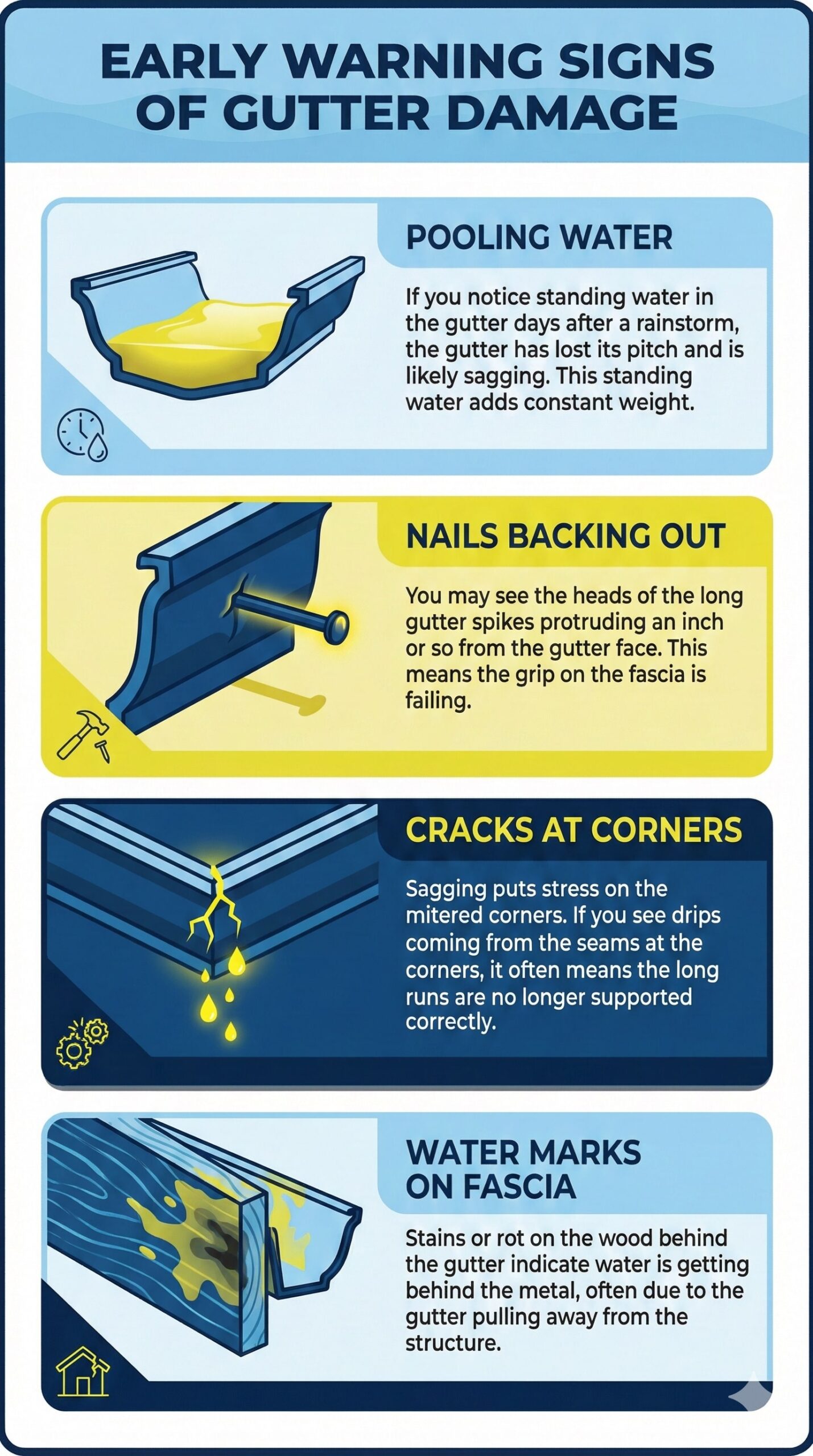
- Pooling Water: If you notice standing water in the gutter days after a rainstorm, the gutter has lost its pitch and is likely sagging. This standing water adds constant weight.
- Nails Backing Out: You may see the heads of the long gutter spikes protruding an inch or so from the gutter face. This means the grip on the fascia is failing.
- Cracks at Corners: Sagging puts stress on the mitered corners. If you see drips coming from the seams at the corners, it often means the long runs are no longer supported correctly.
- Water Marks on Fascia: Stains or rot on the wood behind the gutter indicate water is getting behind the metal, often due to the gutter pulling away from the structure.
If you spot these issues, it’s important to call us sooner rather than later. We can often re-secure a gutter if the wood is still sound, but if it’s left to hang, the fascia will eventually rot, leading to a much more complex repair job.
How Do Gutters Hold Up During Tornadoes or High-Wind Storms?
In Harvest, we’re no strangers to severe weather. From straight-line winds to the occasional tornado warning, our homes endure significant stress throughout the year. Many homeowners wonder how their gutter systems fare during these intense events and what role cleaning plays in their stability. The reality is that a clogged gutter is significantly heavier and more vulnerable to wind damage than a clean one. When gutters are filled with wet leaves, sludge, and debris, they carry a massive static load. If a high-wind storm strikes, that extra weight puts immense strain on the fascia board and the hangers securing the gutter to your home.
We’ve seen instances where the combination of wind uplift and heavy debris caused gutters to detach completely. This can turn the gutter itself into a dangerous projectile or cause it to swing violently, damaging siding and windows. Keeping the gutters clean reduces this weight, allowing the hardware to perform as intended without the added burden of hundreds of pounds of wet muck. Furthermore, windstorms often bring torrential rain. If the gutters are already full, that water has nowhere to go but over the edge, potentially flooding flower beds or pooling against the foundation right when the soil is already saturated.
- Wind Resistance: Clean gutters present a lower profile and less mass, making them less likely to be ripped from the fascia during high gusts.
- Structural Integrity: Reducing debris load helps prevent the spikes or hangers from backing out of the wood over time, which keeps the system tighter to the house.
- Debris Impact: Storms often blow new debris onto the roof. If the gutters are already clear, they can better handle the sudden influx of leaves and twigs without immediately clogging and overflowing.
- Water Management: During the heavy downpours associated with severe storms, a clear path is vital to move water away from the home’s perimeter as quickly as possible.
Your Harvest, AL Gutter Company: We Love This Growing Community
Harvest, AL is a unique blend of agricultural roots and modern residential life. It’s an area we’re incredibly fond of serving because of the friendly residents and the beautiful landscape. Historically known for its cotton fields and farming, Harvest has grown into a premier residential destination for those working in nearby Huntsville yet seeking a quieter place to call home.
We love the local landmarks that give this area its character. Capshaw Mountain is a standout feature, offering a touch of rugged terrain in an otherwise rolling landscape. The community spirit here is palpable, especially during local events or high school football games that bring neighbors together. We also appreciate the ample green spaces and the fact that many homes here sit on larger lots, giving families room to breathe. At Gutter Gliders, we treat every home in Harvest with the respect it deserves. We know that whether you’re near the bustle of Highway 53 or tucked away on a quiet county road, your home is your sanctuary. We’re dedicated to helping you maintain it with our professional cleaning services.
Can Nearby Construction Impact Gutter Functionality Years After the House Was Built?
This is a question we hear often, especially in a rapidly developing area like Harvest. You might think that once your home is built, the external factors affecting your gutters remain static. However, the environment around your home is constantly changing, and nearby construction can have a surprising impact on how often your gutters need cleaning and how well they function. New subdivisions, road widenings, or commercial additions generate significant amounts of airborne dust and particulate matter.
Even if the construction is a few streets away, wind can carry fine silt and dirt that settles on your roof. When it rains, this dust washes into your gutters. Unlike leaves which might blow away, this silt creates a heavy, mud-like sediment at the bottom of the gutter trough. This sludge can harden when dry and become incredibly difficult to flush out, reducing the flow capacity of your gutters even if you don’t see leaves sticking out of the top.
- Sediment Buildup: Construction dust creates a dense layer of muck that traps moisture and accelerates rust in galvanized systems or corrosion in aluminum.
- Altered Wind Patterns: New structures or removing stands of trees nearby can change how wind hits your roof, potentially causing leaves to pile up in valley areas they previously skipped over.
- Landscaping Maturity: Trees planted ten years ago during a neighbor’s construction project are now tall enough to drop debris directly onto your roof.
- Drainage Changes: Large-scale grading for new developments can sometimes alter the water table or surface runoff patterns, making it even more critical that your own drainage system is working efficiently to prevent yard swamping.
We recommend monitoring your gutters more frequently if you notice heavy construction equipment or active job sites in your vicinity. The “invisible” debris from these sites can clog downspouts just as effectively as a pile of maple leaves.
How Do Spring Pollen or Autumn Leaves Contribute to Blockages Compared to Winter Ice?
The cycle of debris in Harvest varies wildly by season, and understanding the difference between pollen, leaves, and ice is key to knowing when to schedule service. Many homeowners assume that autumn is the only time they need to think about their gutters. However, spring in Alabama brings a unique challenger: the “green haze” of pollen.
During the spring, oak trees and pines release massive amounts of pollen. This fine powder coats everything, including your roof. When spring rains arrive, this pollen washes into the gutters and forms a thick, paste-like sludge. It isn’t as bulky as autumn leaves, but it’s far stickier. It can coat the interior of the downspouts and the elbows, narrowing the passage for water. If this sludge is left to dry during the hot summer, it becomes almost like concrete, making it very difficult for water to pass through later in the year.
Ice dams are often the result of pre-existing clogs. If the pollen or leaves weren’t removed, water gets trapped and freezes. This expansion can split seams and pull gutters away from the house.
We approach each season differently. In the spring, we focus on flushing out that sludge to ensure flow. In the fall, it’s about bulk removal. Understanding these seasonal nuances allows us to clean your system more effectively, rather than just using a “one size fits all” approach.
Can a Single Missed Annual Inspection Allow Enough Debris To Cause Foundation Damage the Following Season?
The short answer is yes, and it happens more often than people realize. In our region, the soil often contains a high percentage of clay. Clay soil is highly reactive; it expands when wet and shrinks when dry. The primary job of your gutter system is to collect water from the roof and divert it far away from your home’s foundation. When you miss an annual cleaning, the gutters clog and water begins to cascade over the brim, dumping gallons of water directly next to your foundation walls.
This concentrated water saturation causes the soil around your footing to expand rapidly, pushing against the concrete. Conversely, as it dries, it pulls away. This constant movement can crack foundations and basement walls. Even one season of neglect can deposit enough leaves and sludge to completely block a downspout. Once that blockage is in place, every subsequent rainstorm contributes to soil erosion and hydrostatic pressure against your home.
- Hydrostatic Pressure: Water accumulating against the foundation wall pushes through microscopic cracks, leading to wet basements or crawl spaces.
- Slab Leaks: For homes on a slab, water pooling at the edge can seep under the concrete, potentially softening the ground support and leading to settling or cracking of the floor.
- Landscape Erosion: Water falling from the roof line acts like a drill, washing away topsoil and mulch, and eventually exposing the footing of the house.
- Termite Attraction: Subterranean termites love moisture. Soaking the ground around your foundation creates the perfect environment for them to thrive and eventually enter your home.
We view gutter cleaning not just as a cosmetic task, but as a critical defense for your foundation. By ensuring that water is moved effectively away from the house, we help you avoid these significant structural risks.
Does Granule Loss From Older Asphalt Shingles Clog Gutters Faster?
Many homeowners in Harvest have roofs that are starting to show their age. As asphalt shingles age, they begin to shed the ceramic granules that protect the shingle from UV rays. You might notice these little sandy particles at the bottom of your downspouts after a heavy rain. While a small amount is normal, an aging roof can shed pounds of this grit over a year, and it presents a unique challenge for gutter flow.
Unlike leaves that float, shingle granules are heavy and sink immediately to the bottom of the gutter. They form a dense, sandy layer that doesn’t wash away easily with light rain. This layer acts almost like sandpaper, trapping lighter debris like twigs and leaf stems that would otherwise flush out. Over time, this sediment builds up and creates a dam, significantly reducing the depth and capacity of the gutter.
- Weight Issues: Wet shingle grit is extremely heavy. A gutter filled with an inch of granules carries significantly more weight than one filled with dry leaves, putting stress on hangers.
- Corrosion Acceleration: This wet sand holds moisture against the bottom of the gutter trough for prolonged periods. In metal gutters, this constant dampness can accelerate rusting and corrosion from the inside out.
- Downspout Elbows: The grit tends to settle in the bends of the downspouts. Once it packs in tight, it’s very difficult to dislodge without high-pressure flushing or taking the elbow apart.
- Flow Disruption: The uneven bottom surface created by the grit disrupts the smooth flow of water, causing turbulence and slowing down drainage during peak rainfall.
If you have an older roof, we often recommend slightly more frequent cleanings to manage this sediment buildup before it hardens and compromises the system.
Trust Us for Gutter Cleaning Near You in Harvest, AL
At Gutter Gliders, we’re committed to helping the Harvest community keep their homes dryer and more resilient against the elements. We take pride in our thorough work, our knowledge of local environmental challenges, and our dedication to customer satisfaction. We don’t just scoop and leave… We check downspouts, evaluate flow, and ensure your system is operating as well as it possibly can.
Don’t let a clogged gutter turn into a wet basement or a damaged roof. Let our team handle the ladder work and the mess so you can enjoy the peace of mind that comes with a well-maintained home.